Start with Toast or Square when you already use its POS and want the menu and kitchen handoff in the same system. Consider ChowNow or Owner if a branded ordering channel and repeat sales are a bigger priority. Compare UpMenu if you want to assemble a storefront, app or delivery modules around the equipment you already have. Test the economics on pickup and delivery separately before assuming the largest advertised discount applies to both.
Follow a busy Friday order from menu to kitchen
Use the restaurant POS systems comparison to decide where staff maintain menu items, modifiers and order routing. Check which parts of that record the online storefront can update.
Once the storefront can send orders to the POS, compare kitchen display systems to check that online tickets reach the right prep station and are visible to the person confirming the order is ready.
Use restaurant inventory management software when recipe and purchase data must explain food cost. An online item marked available is a service decision, not a substitute for a reconciled ingredient count.
| Product | Ordering path | Operating boundary | Price or fee to verify |
|---|---|---|---|
| Toast Online Ordering | Direct orders into Toast POS | Native menu sync and prep times | Ordering bundle, processing and delivery |
| Square Online Ordering | Square profile and eligible discovery channels | Square location and menu setup | Profile, checkout and delivery fees |
| ChowNow | Branded direct ordering and discovery | Match aggregation and POS integration to plan | Subscription, setup, payments and courier fees |
| Owner | Branded ordering with website and app | Verify POS integration and diner receipt | $249 plus merchant fee or $499 flat plan |
| UpMenu | Modular direct storefront | Confirm POS link and applicable order cap | Storefront allowance plus selected modules |
Toast Online Ordering
Toast documents first-party orders flowing into Toast POS, automatic online menu sync and configurable prep times. Consider it if the kitchen already uses Toast and management wants the online order to enter the same flow. Toast advertises commission-free direct orders and describes a flat fee for its delivery service. Obtain the specific subscription, processing and delivery terms rather than using the advertised POS entry price as an ordering quote. Official references include Product and scope, Plan or supporting details.
Square Online Ordering
Square describes a free online ordering profile without an added monthly profile fee, plus pickup and delivery options. Its support guide explains how to configure Order with Google and sync location data. Consider it when you already manage items and locations in Square. Verify the online payment rate, delivery charges and whether a separate website plan is required for the customization you want. Official references include Product and scope, Plan or supporting details.
ChowNow
ChowNow's plan page distinguishes direct ordering and discovery from higher-plan third-party aggregation and centralized menu tools. Launch lists a starting monthly equivalent of $229 with annual billing or $249 with monthly billing. The pricing page also lists $119 to $499 for setup and 2.95% plus $0.29 per transaction, with separate Flex Delivery and app-related fees. Confirm the applicable offer and POS integration for your location. Official references include Product and scope.
Owner
Owner lists $249 per month plus a 5% restaurant fee per order, or $499 per month without that restaurant fee. At those displayed rates, the two restaurant charges alone meet at $5,000 in monthly eligible order value. That arithmetic excludes any differences in diner fees, processing, taxes or delivery. Consider Owner if you need a branded website and app as well as ordering, and verify the actual receipt and kitchen handoff. Official references include Product and scope.
UpMenu
UpMenu shows storefront tiers of $49 for 75 orders, $89 for 210 and $169 for unlimited orders on its monthly pricing page. It lists separate modules including a branded app and POS integrations. Consider it when you want to price only the channels you need. Verify the applicable location count, order allowance or overage, exact POS integration, payment charges and cost of the delivery setup before choosing a tier. Official references include Product and scope.
Compare the work behind each order
Count the cost of a missed order alongside the cost of a completed one. At dinner rush, the channel must reflect a sold-out item, pass the correct modifiers to the kitchen and show which party can cancel or refund the order. Then compare a monthly statement and a diner receipt separately. A customer-paid fee still changes the total the diner sees. A cheap storefront can be the wrong choice if staff must rekey every order; replacing a working POS can also be unnecessary if the existing integration preserves the menu and order details.
By Toolverly Editorial, with AI-assisted research and drafting.
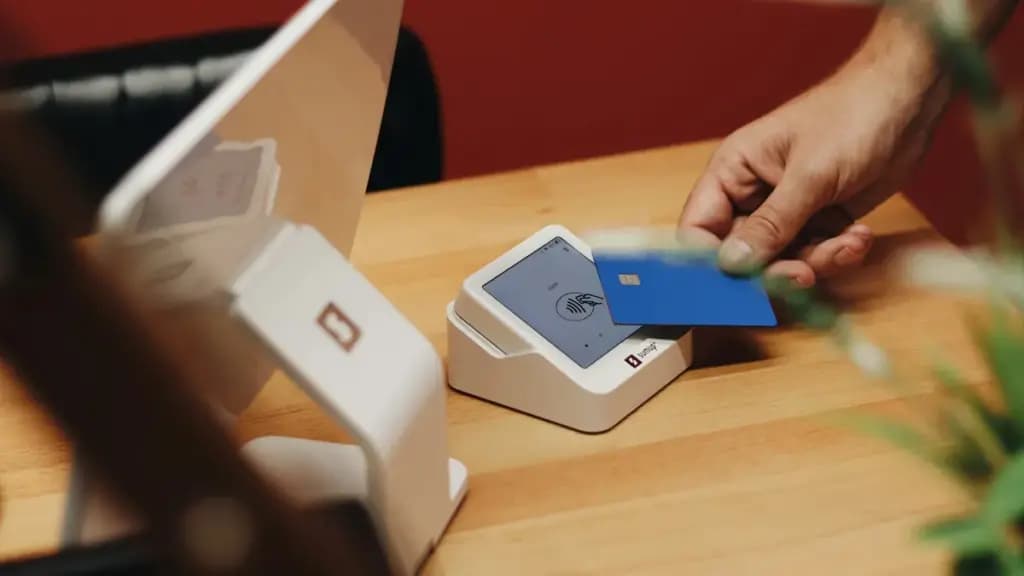
Photo by SumUp on Unsplash. Read about our publication or send a correction.