A restaurant POS purchase changes the flow of service. An order must reach the correct preparation station, amendments must stay understandable, and the final check must reconcile with the payment. When those handoffs fail, the cost appears during a busy shift rather than in a software feature comparison.
Square, Toast, Lightspeed Restaurant, TouchBistro, and SpotOn take different approaches to the combination of software, hardware, payments, and service. This guide focuses on restaurant ordering and check operations. A web storefront belongs in our ecommerce platform comparison; staff coverage can be evaluated separately with our employee scheduling guide.
Official US-oriented commercial pages were checked on October 16, 2026. Other markets can have different products, hardware, and fees. We have not run a restaurant on these platforms. The evaluation suggestions below are intended to help operators compare a realistic shift and an itemized contract.
Compare service flow and the complete cost
| Product | Best fit | Main strength | Meaningful tradeoff |
|---|---|---|---|
| Square | Operators wanting a low subscription entry point | Restaurant features inside a broader business platform | Device add-ons and processing remain separate |
| Toast | Restaurants wanting a coordinated dedicated stack | Connected restaurant software and approved hardware | Configuration and commercial terms require a quote |
| Lightspeed Restaurant | Teams needing service controls and operating insight | Restaurant POS with reporting and connected modules | Package, screen, and regional terms affect cost |
| TouchBistro | Table-service operators comparing modular setups | Menus, floor plans, tables, and staff workflow | Headline software price excludes important costs |
| SpotOn | Operators comparing upfront versus ongoing costs | Explicit hardware and processing choices | Zero monthly station fee has contract conditions |
Square
Square’s current US restaurant pricing sits within Square Free, Plus, and Premium. Its feature set connects ordering, payments, restaurant operations, and other business tools. That makes it relevant for an operator who wants a manageable starting point and may also sell through more than one channel.
The checked page lists $0 per location per month for Free, $49 for Plus, and $149 for Premium. Processing fees remain payable. Plus and Premium subscriptions apply to each location, so a second venue changes the software budget even if the same owner runs both.
Strength: an entry plan without a monthly subscription charge. Limitation: the configured restaurant system can still include device fees. Square KDS is separately priced per device on eligible paid plans, and kiosk software also has a separate device charge.
Choose Square for evaluation when its ordering model matches the venue and the complete bill stays understandable. Ask staff to modify an order, move a check, and reconcile a refund. For connectivity planning, distinguish continued ordering from later payment submission and confirm the current device-specific offline conditions rather than assuming every transaction will eventually settle.
Toast
Toast connects restaurant point of sale with approved hardware, kitchen displays, ordering, payments, and optional operating tools. The advantage is a coordinated restaurant environment with a single stack to discuss during implementation. It is especially worth evaluating when table service, kitchen routing, and digital orders must work together.
The pricing FAQ says hardware and implementation costs depend on the configuration. Its Starter Pay-as-You-Go option reduces upfront hardware and installation costs through a different platform rate. That is a financing and commercial choice, not evidence of a cost-free system.
Strength: restaurant-focused coordination and included Toast Care support. Limitation: services operate only on devices Toast identifies as compatible; existing tablets are not automatically reusable. Confirm device approval, installation, replacement, and support scope in writing.
The checked pricing page did not expose a dependable numeric package schedule, so request an itemized quote covering software, payments, hardware, implementation, add-ons, and term. Choose Toast when the connected workflow solves a concrete service problem. Rehearse an amended order across front of house and kitchen before deciding that the coordinated stack justifies its commitments.
Lightspeed Restaurant
Lightspeed Restaurant combines configurable POS, menu management, floor plans, operating insights, and connected restaurant modules. Its current US page presents Starter, Essential, Premium, and a quoted Enterprise package. The practical decision is which functions the venue needs every shift and which additional modules the management team will actually maintain.
Its strength is the range of restaurant controls around the transaction, including reporting and options for multiple locations. This can be useful when managers need to understand service and venue performance in the same operating environment.
The limitation is package interpretation. The checked page displays USD figures of 69, 189, and 399 for its first three tiers, but the retrieved display does not make a sufficiently clear billing commitment for a reliable monthly comparison here. Confirm the selected term, location, hardware, and processing requirements with Lightspeed instead of treating those figures as an unconditional quote.
Kitchen Display System pricing is explicitly listed at $30 per screen per month. Shortlist Lightspeed when its service controls and reporting fit the venue, then price the actual station and screen configuration. During evaluation, trace a split check and kitchen correction through the reporting record.
TouchBistro
TouchBistro’s base POS includes menu management, reporting, floor plan and table management, staff management, support, and integrations. Its current pricing also presents a hardware-inclusive Essentials Bundle and a custom setup. That makes it useful for table-service teams comparing a basic POS against a more complete installation.
The public starting price is $69 per month for POS software. Hardware, payment processing, and additional fees apply. The Essentials Bundle starts at $119 per month with restaurant-grade hardware and integrated payments; processing and additional fees still apply. Neither headline describes every possible venue setup.
Strength: the table and menu workflow is central to the product offering. Limitation: capabilities such as kitchen displays, reservations, online ordering, and other guest or back-office tools need separate scope confirmation.
Choose TouchBistro for evaluation when floor management and table service dominate the shift. Request a configuration covering all terminals, handhelds, kitchen stations, and required modules. Ask how an amended order is communicated after it has already reached the kitchen, and which controls preserve a readable history of voids, discounts, and payments.
SpotOn
SpotOn makes the tradeoff between upfront investment and ongoing charges unusually visible. Its All-In plan lists $0 per station per month for POS software and hardware, but carries processing minimums and a minimum two-year term. The alternative POS Essentials lists $55 per station per month with hardware and implementation priced separately.
The checked card-present examples are 2.79% plus $0.20 for All-In and 2.45% plus $0.15 for Essentials, with a separate American Express rate on Essentials. These are specific public examples, not universal processing quotes. Compare the card mix and transaction count you actually expect.
Strength: operators can examine the commercial tradeoff directly. Limitation: a zero station subscription shifts cost into other terms. Proprietary restaurant hardware is required, so existing equipment is not automatically transferable.
Optional bundles add another dimension: the advertised Core Bundle combines a monthly fee with a processing-volume-based component. Obtain the precise scope and cap in writing. Choose SpotOn when the workflow fits and the full agreement is competitive for your venue, rather than choosing only on the lowest upfront number.
Rehearse a difficult shift before signing
Build an evaluation around the same service sequence for every vendor. Open a table, add modifiers, send an order to two preparation stations, remove an unavailable item, and split the check between guests. Include a refund after the shift closes. Use demonstration accounts and simulated transactions so the exercise does not create real customer charges.
Next examine failure behavior. Ask what continues when the internet connection drops, which devices communicate locally, and how transactions synchronize afterward. Require device-specific answers and a written recovery procedure. A broad claim of offline support does not establish the behavior of every payment, integration, and screen.
Compare the first year and a normal later year separately. List software per location or station, terminals, handhelds, screens, installation, support, add-ons, payment percentage, per-transaction fees, and contract obligations. A venue with many small checks can reach a different conclusion from one with the same revenue and fewer large checks.
- Map the route from guest request to kitchen instruction and settled check.
- Price every station, screen, venue, and required add-on.
- Confirm payment rates by card type and transaction method.
- Document outage recovery, replacement hardware, and support escalation.
- Ask how menus, reports, and transaction history can be exported.
Square offers an accessible subscription starting point; Toast emphasizes a coordinated restaurant stack; Lightspeed deserves consideration for operating controls and insight; TouchBistro centers table-service workflows; and SpotOn exposes different ways to pay for the installation. The strongest choice preserves clear handoffs during service and remains affordable under the restaurant’s actual transaction pattern.
Official sources
Checked October 16, 2026: Square restaurant pricing, Toast pricing and FAQ, Lightspeed Restaurant overview, Lightspeed pricing, TouchBistro pricing, and SpotOn restaurant pricing.
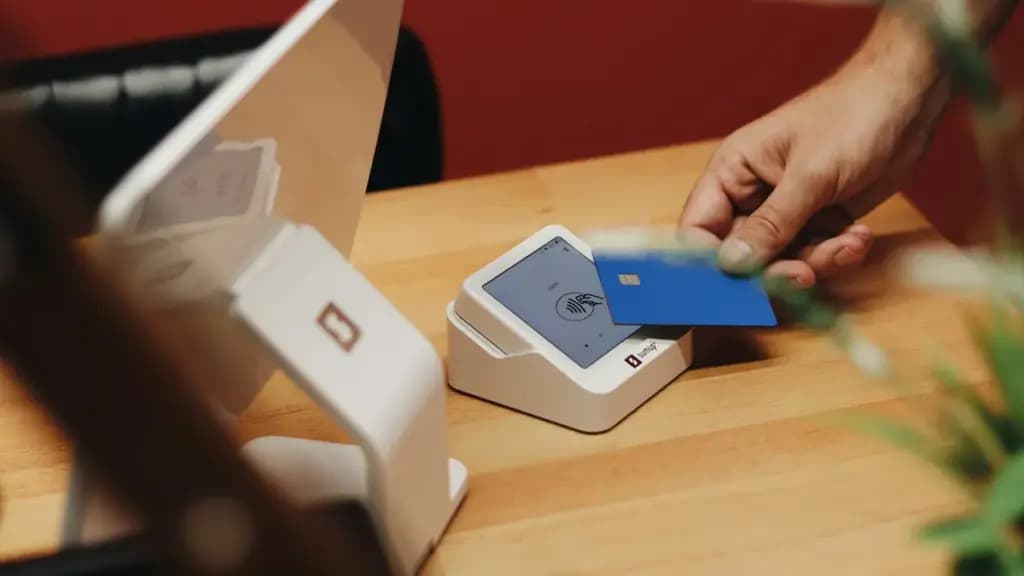
Photo by SumUp on Unsplash. Read about our publication or send a correction.