Choose a cloud GPU provider around the workload you must keep available and the resources you must retain between jobs. Runpod separates Pods, Serverless and cluster offerings. Lambda distinguishes self-serve instances from larger cluster commitments. CoreWeave publishes region-specific instance and service pricing. DigitalOcean GPU Droplets expose on-demand, spot and reserved choices with explicit lifecycle billing. Vast.ai offers a marketplace with different rental types and host characteristics. The lowest displayed GPU-hour can be the wrong purchase when the workload needs several GPUs, retained data or dependable restart capacity.
What the buying decision includes
Make the comparison about the same hardware form, accelerator memory, GPU count per instance, CPU/RAM, local versus persistent storage, region and network needs. Separate uninterrupted work from checkpointable batch jobs. A price per GPU-hour differs from a price per multi-GPU instance-hour, and neither is a measured cost per trained model or inference. These are infrastructure purchases with operating responsibilities; a model API or managed agent product is a different service. Current availability and account limits must be confirmed for the actual deployment.
| Provider | Shortlist reason | Cost boundary | Lifecycle question |
|---|---|---|---|
| Runpod | Choice of Pods, workers and cluster products | Compute plus different storage lifetimes | What survives stopping or balance exhaustion? |
| Lambda | Self-serve instances and larger cluster access | Per-GPU rates within specified instance sizes | Is the required capacity self-serve or committed? |
| CoreWeave | AI infrastructure with explicit instance shapes | Region, instance, GPU and ancillary services | Is the quoted rate for a node or a GPU? |
| DigitalOcean GPU Droplets | GPU virtual machines in an existing cloud workflow | Second-based billing with minimum; powered-off billed | Will the resource be destroyed or merely stopped? |
| Vast.ai | Marketplace choice and rental flexibility | Host offer, rental type, storage and restart | Who hosts the data and can the GPU be reclaimed? |
Runpod
Runpod distinguishes interactive Pods, Serverless workers, instant clusters and reserved clusters. Its Pod guide says compute is billed by the second and on-demand resources cannot be displaced by another user. Storage has separate lifetimes: container storage is erased when a Pod stops, a volume disk persists until deletion and can cost more while stopped, and a network volume is separate portable storage. Savings plans are deprecated for new purchases. Runpod official source.
Consider Pods when the team can own container lifecycle and persistent data placement. Compare Serverless separately if worker-based serving is the actual requirement. A stopped GPU is not a complete cost or recovery plan: decide which files belong on durable storage and what the account balance policy will do. Current documentation warns that balance exhaustion affects data differently depending on network-volume use. Price the storage that must survive and confirm deployable capacity rather than assuming the lowest catalog rate includes persistence or a reservation. Runpod official source.
Lambda
Lambda lists self-serve, first-come instances in one-, two-, four- and eight-GPU configurations, alongside 1-Click Clusters and reserved capacity discussions. Instance prices are labeled per GPU per hour, with CPU, RAM and local storage specified for the complete configuration. Its larger cluster table uses GPU count and duration commitments, with applicable sales tax, VAT or GST additional. A cluster reservation and an available single instance are different offers. Lambda official source.
Shortlist Lambda when a defined GPU instance fits the application, or when the team can specify a larger cluster requirement. Multiply the quoted unit by the actual GPUs in the chosen configuration before comparing an invoice with another provider node rate. Keep commitment length, reservation scope and availability separate from an hourly reference amount. A published accelerator model does not establish that it is immediately available in the desired region or that local instance storage is the right archive for work the organization must retain. Lambda official source.
CoreWeave
CoreWeave publishes North America and Europe tables with GPU count, memory, CPU, RAM and local storage for each shape. Many entries represent eight-GPU systems, while some use other counts. The tables distinguish on-demand, spot and single-GPU inference prices; these should not be treated as interchangeable configurations. The wider pricing page also covers CPU, storage, networking and managed services. Some hardware requires a sales discussion. CoreWeave official source.
Consider CoreWeave when a team needs to specify an AI infrastructure deployment rather than merely rent any available card. Normalize the actual instance shape and regional pricing first. A multi-GPU node can be appropriate for tightly coupled work but is a poor base-price comparison for a job using one GPU. Add the storage, networking and managed-service scope the deployment actually needs, then confirm the interruption and capacity terms. A broad infrastructure catalog does not mean every service is bundled with GPU compute. CoreWeave official source.
DigitalOcean GPU Droplets
DigitalOcean GPU Droplets have on-demand configurations with stated GPU count, CPU, RAM, disks and transfer. The current page distinguishes 12-month reserved commitments from spot instances, which can be reclaimed and may receive less than the intended notice in some circumstances. GPU Droplets are billed per second with a five-minute minimum. Powered-off Droplets remain billable until destroyed because their resources stay reserved; GPU usage does not inherit the ordinary monthly 672-hour cap. DigitalOcean GPU Droplets official source.
Shortlist this service when GPU virtual machines fit the team cloud operations. The crucial cost decision is whether to preserve the Droplet or export needed state and destroy it between jobs. Powering off can be operationally convenient, but is not a compute-cost saving. Keep spot notice assumptions out of a workload that cannot tolerate interruption, and distinguish a 12-month contractual rate from the on-demand purchase. The exact accelerator and one- versus eight-GPU configuration still matter more than the brand alone. DigitalOcean GPU Droplets official source.
Vast.ai
Vast.ai publishes market-driven GPU offers with on-demand, interruptible and reserved rental choices. Its operational documentation says stopping preserves instance data while storage charges continue; restarting waits for GPU availability, which can be lost to another renter. Destroying removes the instance and its data. The documentation also states that hosts can technically access files on their machines, making the selected host and data policy consequential. Vast.ai official source.
Consider Vast.ai for workloads that can select and manage a suitable offer, particularly when interruption or relocation is acceptable. Evaluate host characteristics, storage, transfer and contract duration with the rate. The pricing page no-interruption description of on-demand use does not promise a stopped instance can reclaim the same GPU immediately. Sensitive business data needs an approved host and handling arrangement; a low price is not that approval. Separate an active rental availability promise from restarting later, and retain important outputs outside a disposable instance as required. Vast.ai official source.
Which purchase fits your operation?
For container work with deliberate storage ownership, compare Runpod Pods with a suitable Lambda instance. For a specified multi-GPU infrastructure deployment, scope CoreWeave and Lambda cluster offers on the same hardware and term. For existing DigitalOcean operations, price GPU Droplets with the powered-off billing rule. For flexible jobs that can manage host choice and restart uncertainty, examine Vast.ai. Compare lifecycle and capacity rights before treating any rate as the cheapest way to run the workload.
A useful order specification names the instance shape, interruption tolerance, data that must survive, capacity needed tomorrow and the event that ends billing. Keep the archive and restart plan explicit. No provider price table establishes model throughput, job completion time or a benchmark-adjusted cost advantage, so those claims should not decide the purchase without evidence specific to the workload.
For related decisions, compare managed Kubernetes for cluster operating boundaries and cloud object storage for durable outputs and datasets.
By Toolverly Editorial, with AI-assisted research and drafting. Product information checked November 3, 2026.
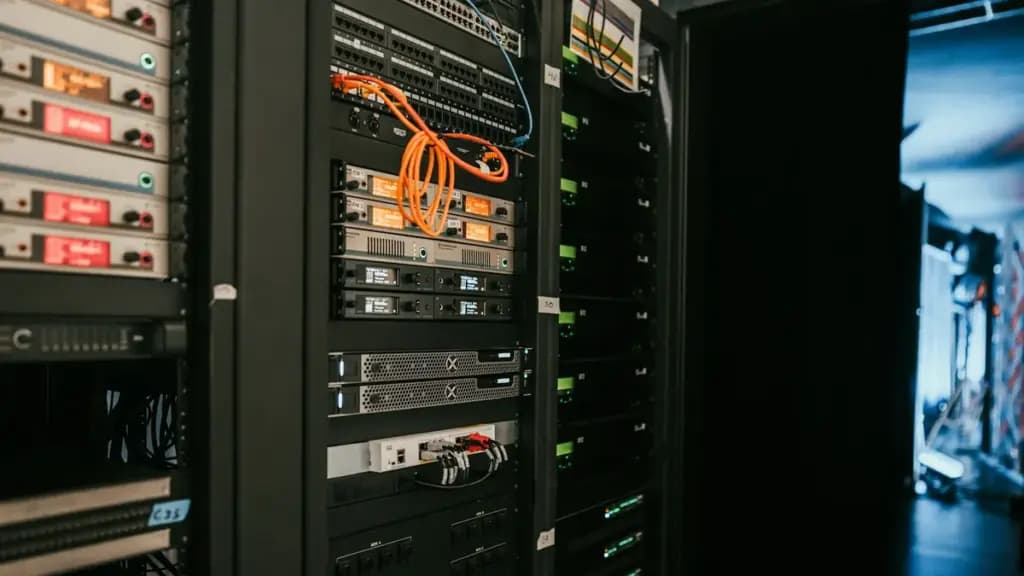
Photo by Kevin Ache on Unsplash. Read about our publication or send a correction.