Choose production planning software around the way work reaches the shop floor. MRPeasy is a useful shortlist for a manufacturer seeking a packaged planning system with explicit feature tiers. Katana fits businesses connecting product sales, inventory and production. Odoo Manufacturing and ERPNext make more sense when production belongs inside a broader ERP implementation. Fulcrum is particularly relevant to job shops connecting quoting, scheduling and live job costs. The deciding difference is who maintains the production model and captures changes, rather than who displays the most attractive schedule.
What the buying decision includes
A material being in stock does not mean a job can start. The required operation may depend on an unavailable work center, an unfinished subassembly or a purchasing delay. Compare bills of materials, operation sequences, capacity calendars, shop-floor completion and actual consumption together. An inventory system can answer how many finished goods are available; this purchase must also explain when more can realistically be made. None of the subscriptions removes the need to maintain accurate routings, lead times and production records.
| Product | Useful starting point | Commercial boundary | Deciding tradeoff |
|---|---|---|---|
| MRPeasy | Packaged production planning with explicit upgrades | Per-user tiers; user-block and annual terms differ | Subcontracting, revision control and API access belong to different tiers |
| Katana | Sales, materials and manufacturing in one operational view | Free limited catalog; scoped annual Advantage contract | Unlimited users does not mean unlimited custom implementation |
| Odoo Manufacturing | Manufacturing inside a wider application suite | Standard versus Custom; implementation and hosting scope matter | Work-center configuration and ERP ownership determine usefulness |
| ERPNext | An extensible ERP with production records under your control | Open-source software plus hosting and implementation | License freedom transfers configuration and operating decisions to the owner |
| Fulcrum | Job-shop quoting, scheduling and live costing | Tailored scope and internal implementation; no per-user tariff | Fit to the shop and integration scope outweigh a headline seat price |
MRPeasy
MRPeasy combines bills of materials, production planning, reporting, purchasing and stock management. Its tier matrix is more revealing than a general manufacturing feature list: Professional adds subcontracting, quality control and serial numbers; Enterprise adds backward production scheduling, multiple production sites and revision control. A shop with outsourced finishing or controlled revisions should choose against those operating requirements instead of assuming the entry tier covers every manufacturing workflow. MRPeasy official source.
The subscription uses per-user plans, a different user-block rule beyond the first ten users and separate monthly or annual terms. Unlimited requires at least two users and includes API/webhook access for paid accounts. Budget the people who plan, purchase and report production alongside the plan-specific functions. The packaged model is attractive when the native workflow fits; a lower subscription tier becomes a false economy if the business depends on a capability explicitly reserved for another tier. MRPeasy official source.
Katana
Katana connects production scheduling, bills of materials, subassemblies and shop-floor task updates with material availability and sales demand. Its manufacturing scope includes in-house and outsourced work, make-to-order and make-to-stock operations. This makes it worth considering when sales channels create demand that must flow into production without a separate planning spreadsheet. Its production view still depends on operators recording progress and consumption accurately. Katana official source.
The current offer is Free and Advantage. Free has a 30-SKU catalog allowance, while Advantage is custom-priced with unlimited SKUs, users and integrations under a scoped annual contract that includes implementation and ongoing services. This is a different procurement decision from buying an old fixed-price Katana tier. Define the custom integrations, reports and automations in the agreed scope; unlimited integration capacity is not a promise that any unspecified workflow will be built at no extra cost. Katana official source.
Odoo Manufacturing
Odoo work centers connect operations to working hours, capacity, setup and cleanup times, and operating costs. Work Orders must be enabled for that workflow. Alternative work centers and scheduled loads help represent where a job can run. Odoo therefore suits a buyer willing to configure the production model as part of the ERP, rather than treating the planning screen as a standalone calendar. Capacity data and operation definitions are implementation responsibilities. Odoo Manufacturing official source.
Odoo distinguishes Standard on Odoo Online from Custom, which adds Studio, multi-company and external API options, with different deployment choices. Odoo.sh hosting is separately costed. Compare the chosen edition, integration route and implementation proposal before considering user prices. The local price and billing term should be confirmed in the proposal. A standard subscription should not be assumed to cover the customization, deployment and integration work required for a broader ERP rollout. Odoo Manufacturing official source.
ERPNext
ERPNext has bills of materials, work orders, job cards, workstations and production planning connected with inventory and quality records. A manufacturer can therefore organize production alongside purchasing, sales and accounting in one ERP. The attraction is control over the data model and the wider workflow. The tradeoff is that the business must decide how these records are configured, which customizations it will maintain and who owns changes after launch. ERPNext official source.
ERPNext is free and open source, but that is not a complete operating budget. Frappe separates hosting from implementation, offers resource-based Frappe Cloud hosting rather than per-user licensing, and points buyers to partners for setup, customization and integrations. An entry hosting allowance should not be treated as the cost of a production-ready manufacturing system. Choose it when you have a credible implementation and support owner, whether internal or a partner, and scope that responsibility beside infrastructure costs. ERPNext official source.
Fulcrum
Fulcrum connects quoting and sales orders with bills of materials, routings, production scheduling, purchasing and live job costs. Its focus on precision CNC and sheet-metal shops is useful context for the shortlist. A quote that becomes a production job can retain its material and operation assumptions, while actual shop-floor information feeds scheduling and costing. That connection matters when changes in job priority affect promised delivery and margin at the same time. Fulcrum official source.
Fulcrum describes pricing by company size, scope and implementation requirements, rather than a traditional per-user license. Its internal team handles workflow configuration, migration and onboarding; evaluation is through a guided demo rather than a self-service trial. Obtain a proposal covering the actual shop, integrations and launch responsibilities. Do not import historical web price tables as a current quote, or apply job-shop suitability to a specialist process-manufacturing requirement without confirming that fit. Fulcrum official source.
Which purchase fits your operation?
Choose the system whose production model your team can keep accurate. MRPeasy favors a packaged tier decision, Katana a connected product operation, Odoo and ERPNext a broader ERP commitment, and Fulcrum a job-shop operating model with a vendor-led launch.
A sales-led manufacturer may value Katana even when a job shop prefers Fulcrum. An ERPNext deployment with a strong implementation owner may be more appropriate than a simpler subscription that cannot represent the required operations. Conversely, flexibility adds little when no one can maintain the configuration. Make the material, capacity and job-cost ownership explicit in the purchase, then compare the complete recurring and implementation commitments.
For related decisions, compare inventory management and equipment maintenance systems.
By Toolverly Editorial, with AI-assisted research and drafting. Product information checked October 28, 2026.
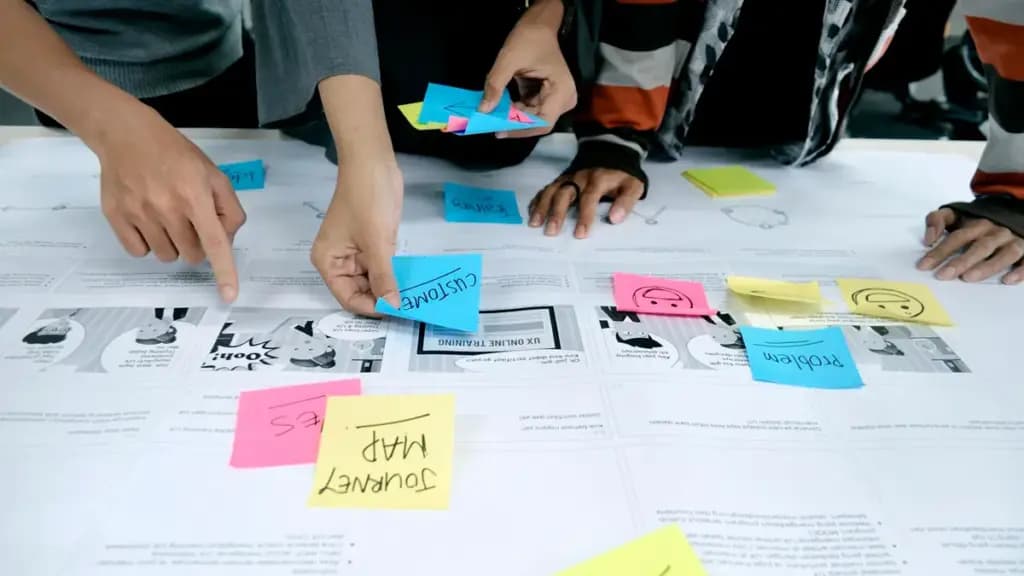
Photo by UX Indonesia on Unsplash. Read about our publication or send a correction.